An impact driver isn’t just a faster drill, it’s a game-changer for fastening, decking, and framing work. DeWalt dominates the home improvement market with tools that balance power, runtime, and ease of use. Whether you’re assembling deck joists, driving 5-inch structural screws into treated lumber, or tackling cabinet hardware installation, the right impact driver cuts your project time in half while reducing wrist strain. This guide walks you through DeWalt’s lineup so you can match the tool to your actual workload, not your dreams of becoming a contractor.
Table of Contents
ToggleKey Takeaways
- The best DeWalt impact driver for home improvement is the 20V Max XR model, delivering 1,500 inch-pounds of torque to handle deck screws, cabinet hardware, and framing tasks in half the time of a standard drill.
- DeWalt impact drivers use a unique rotating mass mechanism that creates rapid rotational bursts, reducing user effort and wrist strain while driving fasteners faster than traditional drill-drivers.
- For DIY projects, a 20V XR impact driver covers 90% of residential fastening needs at under $200 as a bare tool, while the more affordable compact 20V model works well for lighter tasks like shelving and cabinet installation.
- Battery runtime depends on capacity—a 5.0Ah battery runs four times longer than 1.3Ah—so owning two higher-capacity batteries with a rotating charge schedule maximizes productivity on weekend projects.
- Cold weather reduces battery charge by 20–40%, and brushless motors on newer DeWalt models run cooler and last longer than older brush versions, making them the better long-term investment.
What Makes DeWalt Impact Drivers Stand Out for DIY Projects
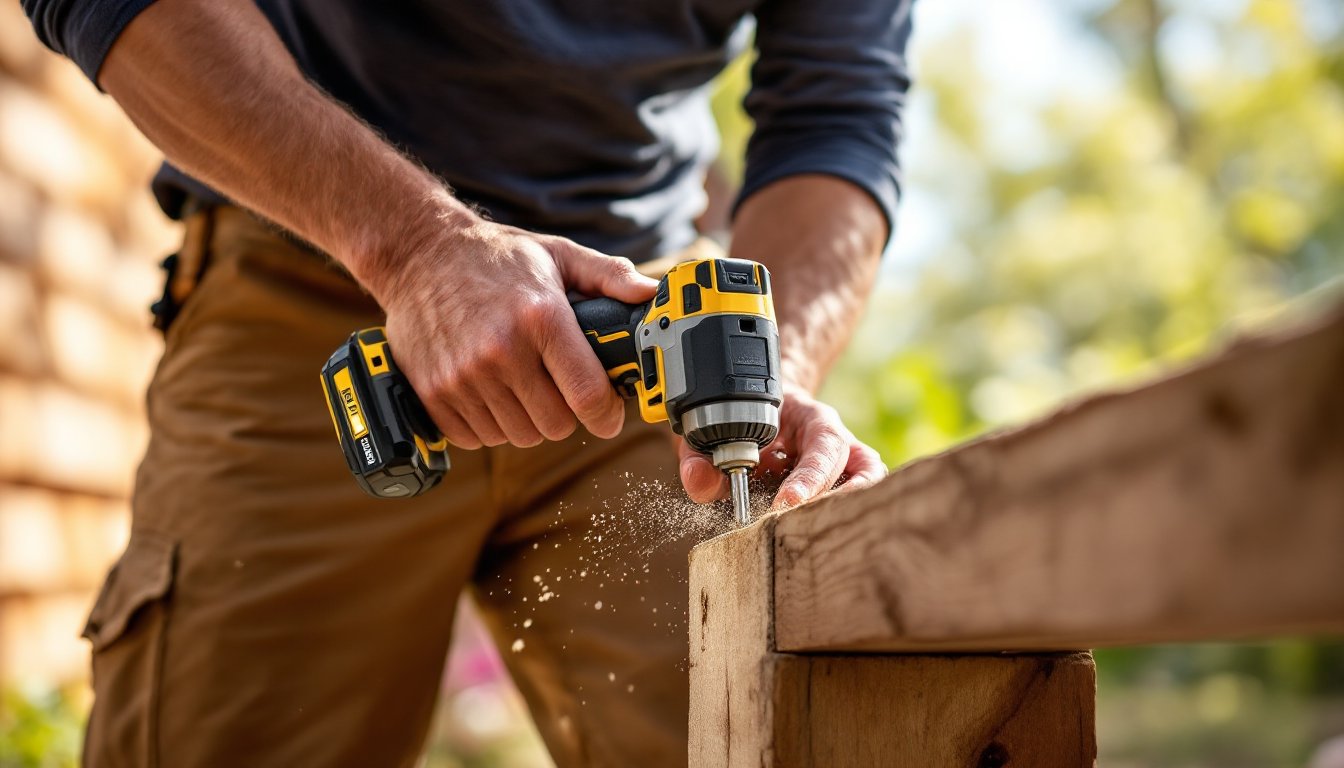
DeWalt’s impact drivers deliver more raw fastening power than a traditional drill-driver because of their mechanism: a rotating mass inside the tool strikes a hammer inside the chuck many times per second. This creates short bursts of rotational force that drive screws faster and with less user effort.
For home improvement, this matters. Driving a 2½-inch deck screw into pressure-treated 2×6 lumber is tedious with a standard drill. An impact driver does it in seconds with minimal pushing. The tool is also compact and lighter than many cordless drills, making overhead work or tight spaces more manageable.
DeWalt’s reputation rests on three strengths: battery ecosystem interchangeability (batteries swap across their 20V and 60V lines), no-nonsense durability, and a dealer network for quick replacement or repair. Homeowners on a weekend schedule don’t want to hunt for parts or wait for mail-order replacements.
Top DeWalt Impact Driver Models Compared
DeWalt’s lineup ranges from a stripped-down 20V model for light fastening to 60V compact powerhouses designed for all-day contractor use. Your choice hinges on project scope, runtime needs, and existing battery compatibility.
Best Overall: Premium Performance Models
The DeWalt 20V Max XR Impact Driver (model DCF887D2 or newer variants) is the most common recommendation for serious DIYers. It delivers 1,500 inch-pounds of torque with one-handed operation and a ½-inch single-sleeve chuck. The brushless motor runs cooler and lasts longer than older brush models. Runtime on a 2.0Ah battery is realistic for light-duty projects: upgrade to 5.0Ah batteries if you’re running multiple fastening tasks back-to-back.
The 60V model (DCF889D2 or similar) trades battery cost for superior runtime and raw power, overkill for most homeowners but ideal if you already own other 60V DeWalt tools. It’s noticeably heavier, which matters if you’re driving fasteners overhead into soffit or fascia.
Both deliver reliable performance consistent with independent testing and come with two batteries and a charger in most kits.
Best Value: Budget-Friendly Options
The DeWalt 20V Compact Impact Driver (DCF801D2 or similar) is the price entry point. It’s smaller, lighter (good for detail work and confined spaces), and costs roughly half what a 20V XR model does. The trade-off is lower torque (950 inch-pounds), shorter runtime per charge, and less robust construction, fine for hanging shelves, installing cabinet hardware, and light deck work, but not for driving 3½-inch bolts into 4×4 posts.
If you own DeWalt 18V batteries from an older drill, some compact 18V impact models still exist on the secondhand market. They’re capable, though newer 20V models offer better efficiency and battery availability.
Key Features to Consider Before Buying
Before committing to a model, evaluate these specifics:
Torque and Fastener Size
Impact drivers are rated in inch-pounds of torque. A 20V XR model at 1,500 in-lbs handles most residential fastening: deck screws, cabinet assembly, door hardware. If you’re regularly driving ½-inch bolts or sinking lag screws into 6×6 timbers, you need the 60V or a dedicated drill-driver hybrid.
Battery Voltage and Runtime
20V systems are the standard. Batteries come in 1.3Ah, 2.0Ah, 5.0Ah, and 8.0Ah capacities. The math is simple: a 5.0Ah battery runs four times longer than a 1.3Ah. For weekend warriors, owning two 5.0Ah batteries means one charges while you work. Keep new batteries on site, cold weather reduces charge by 20–40% per the manufacturer.
Chuck Type
Nearly all impact drivers use a ½-inch collet or single-sleeve chuck. This limits you to hex-drive fastening bits, which fit screws and bolts but not traditional drill bits. If you need to switch between drilling and driving in one tool, a drill-driver hybrid (a different class entirely) is better.
Brushless vs. Brush Motor
Brushless motors are standard on new 20V XR and higher models. They run cooler, have longer lifespan, and waste less battery energy to friction. Older brush models still work fine but run hotter under load and need eventual replacement.
Weight and Balance
Compact models weigh around 3.6 lbs: XR models around 3.8 lbs. You don’t think about weight for five minutes, but you feel it after an hour of overhead work.
Real-World Applications for Home DIY Tasks
Deck Building
You’re fastening 2×6 pressure-treated boards to 2×10 joists with 2½-inch exterior-grade screws. A 20V XR impact driver drives each screw in two seconds flat. Use safety glasses, deck screws sometimes snap and spin off, and they’re sharp. Wear heavy gloves if you’re working with pressure-treated lumber: the chemical copper compounds irritate skin after hours of handling.
Cabinet and Door Hardware
Installing cabinet hinges, drawer pulls, or deadbolts involves driving 1-inch to 1¼-inch screws into wood or drywall. A compact 20V impact driver is overkill but saves wrist fatigue. Slower speed settings or a regular drill-driver is actually better here because you need more control and less torque to avoid stripping screw heads or cracking frames.
Pergola and Swing Set Assembly
Heavier fasteners and thicker wood mean you’re using 3-inch structural screws or ⅜-inch bolts. A 20V XR handles this, though you’ll feel the feedback in your hands. A second person to hold the opposite side of the joint reduces strain and speeds the job.
Fence Repair and Installation
Driving 3-inch galvanized screws or 2-inch bolts into 4×4 posts is the sweet spot for a 20V XR impact driver. A 60V model is overkill unless you’re installing a quarter-mile of fencing in one weekend.
For all fastening tasks, work environment matters. Hot sun reduces battery efficiency: cold weather shortens runtime. Damp or salty air (coastal homes) accelerates tool corrosion, store tools indoors and wipe salt spray off quickly. Consult practical how-to resources and hands-on guidance if you encounter unfamiliar fastening scenarios.
Conclusion
A DeWalt 20V Max XR impact driver handles 90% of home improvement fastening work and costs under $200 as a bare tool. If you already own DeWalt batteries or tools, it integrates seamlessly. Start with that, and upgrade to 60V only if you’re regularly running out of battery or driving the biggest fasteners. Buy two batteries, keep them rotated, and your weekends are cheaper and faster.